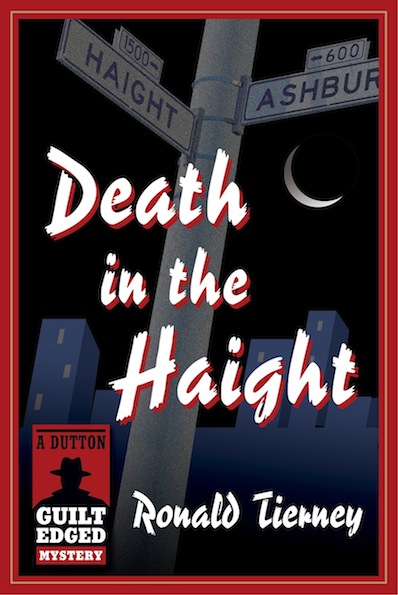
Another title to this post could be “change or die.” Many of us, particularly those of us who grew up when the book — the object itself —was sacred, are being buffeted about by stormy changes in the business. These changes are caused, in large part, by the invention of the e-book and certainly by the ease with which we writers can publish (though not necessarily market) our own work.
In what might now be called the “olden days,” we might have found a “pre-read” book in a dusty used bookstore for a dollar. We might even find a stack of beat-up, old books on the curb along with a stack of dented kitchen pans and a bureau with missing drawers awaiting the rounds of a man with a grocery cart. But new books for free? No, not unless it was political or religious propaganda. And in that case, you knew what you were getting. Most likely you got exactly what you paid for. In those days, I say from my creaking rocking chair, even Readers Digest was treated with some level of respect.
Yet, increasingly on crime-fiction related websites, blogs and Facebook pages, I’m seeing, “Get this book ‘free.’” This usually refers to a download of an e-book. Some of the free offerings seem promising, written by professional writers. The books have catchy names and enticing covers and blurbs from generally reliable sources. Sometimes the offer is only available for a few days. But sometimes, it’s just a free book. And for big spenders with a high level of discretionary income, there are any number of books available for a whopping 99 cents.
Last week I read an interesting post on the blog, Murderati, which nearly always has something thought provoking. This one was by guest columnist Scott Nicholson who has been on the cutting edge of ebook and self-publishing. Many of us guessed correctly that ebooks were the wave of the future, and that this format, in particular, would encourage the proliferation of e-books. Most of us, on the other hand, had no idea how quickly the tsunami would arrive and how forceful it would be. He and a few others saw it coming. And now he is suggesting that another big wave is arriving and it is the “free book.” Now that he’s said it and I’ve thought about it, the notion makes sense. Sadly, it makes sense.
I’m as guilty as anyone when I expect stuff on the Internet to be free. I stopped reading The New York Times editorial pages when they partitioned the site and allowed me access to Maureen Dowd only if I paid a fee. I don’t go to sites I have to pay for. I can’t justify my feelings that you pay for books, but you get the Huffington Post for free, a site that gets most of its stuff for free as well. I understand that writers write for web sites, that they do research, that there is some overhead and that no one will do these things for free, at least for very long. So I may be part of the problem. But I see how my actions or lack of them help shape the future that I really don’t want. The thing is, it doesn’t make any difference. The wave is coming.
What Nicholson is saying is just an extension of that nonpaying mindset. He is merely applying it to another kind of product one gets from the Internet — the book. I truly want to say he’s wrong. But I strongly suspect he isn’t. So how will writers be paid for their professional services? Sponsorship. Advertising. How will that work? Probably in a variety of ways. A company or organization wanting to be viewed as philanthropic and supportive of arts and literature might choose some writers to endow with minimal exposure. Perhaps a little sentence acknowledging the support of the such and such foundation, kind of like they do on PBS. Another way is branding. A company may have a logo placed, subtly or not so subtly, on various places in the book so the reader will keep the word Mountain Dew top of mind. Matching products to individual books or writers might be a fun game. Crime fiction may be a great way to sell the new Glock 21. Then, of course, there is the more subtle approach — product placement. A book may contain advertising from more than one advertiser. Likely this will develop in significantly strategies on many levels.
As Nicholson also suggests, the whole notion of “flat text” on the screen is a temporary notion anyway. The possibilities of enriching text with graphics, static and non-static, are endless and fascinating. Using this technology to make incredible, as yet unseen thrillers, for example, is exciting. Using this technology to promote Coca Cola is inevitable. As you read about the victim being tied up in a third world jungle waiting for armies of hungry ants, an image of an ice cold Coke bubbles away in the margin.
Rail against it all you want. Some writers refused to use word processors, forgetting of course, that the earlier writers used quills and before that a chisel. What’s coming is what’s coming. And what’s coming is product placement. The truth is that I have always placed products in my books. Many writers do. We don’t get paid for it. Speaking for myself, I did it to help define character and make clearer what the reader envisions when he or she reads a scene. For example, if someone in the story wears a Burberry scarf, my purpose was not to sell Burberry, but to make the picture of that scene come through quickly and specifically. The use of the high-end, fashion-conscious Burberry also gives clues to the personality or nature of the character.

But, if a writer has a set of guidelines for product use in order to meet the contract that provides conditions of payment, in what way does that influence the writer, the plot, the characters? Unless your characters drive some model of Toyota, you’re out there on your own, writer. No marketing. No income. Just remember for every click on Prius, you get 30 cents. Does that matter if your only purpose is to entertain? This isn’t a new question. It’s been done for years in film and TV. How much did BMW have to pay the producers to replace James Bond’s Aston Martin in one of the Bond films? But books?
How much more material can our world be? Will each tree in the park have a plaque that says brought to you by Sherwin Williams? A friend of mine often ends one of our discussions with: “I’m going back to my apartment and lock the door.” He says it in a way that implies he will never come out again. There is that temptation. Of course, the world will go on. And most of the readers of the future won’t notice how the game has changed. For me the only upside is that those pirating, or appropriating if you wish, our books off the Internet will have been pirated themselves. You can’t steal a free book.
CAPTIONS: (TOP) A new patriotic crime novel could attract some interesting advertising. (BOTTOM) James Bond, starring BMW and Pierce Brosnan.

 When I created Life Death & Fog Books, I did so on a
shoestring budget. The point was to
reissue earlier works my publisher had no interest in and shorter works that
couldn’t find a market because they were short.
My goal was not to skimp on quality, whether that applied to the story,
editing or design. But I could not
afford to print thousands of books and store them, risk their return unsold, or
incur shipping expense. So I worked with
talented book designers who would do the work on spec with the idea of sharing
in whatever profit was made. Amazon was willing to print on demand and distribute
the trade paperbacks and ebooks. No
upfront costs. If there had been, I
couldn’t have done it.
When I created Life Death & Fog Books, I did so on a
shoestring budget. The point was to
reissue earlier works my publisher had no interest in and shorter works that
couldn’t find a market because they were short.
My goal was not to skimp on quality, whether that applied to the story,
editing or design. But I could not
afford to print thousands of books and store them, risk their return unsold, or
incur shipping expense. So I worked with
talented book designers who would do the work on spec with the idea of sharing
in whatever profit was made. Amazon was willing to print on demand and distribute
the trade paperbacks and ebooks. No
upfront costs. If there had been, I
couldn’t have done it. The situation was uncomfortable. I am an avid bookstore customer. I have visited every San Francisco bookstore,
new and used, and have written about them here in an effort to get the word out. I buy most of my books at a couple of my
favorite independent bookstores in the city — and did so before Borders and
B&N closed in San Francisco — and feel really good when I visit and the
aisles are crowded and the stores are buzzing.
That makes me feel even guiltier when I promote my e-books on-line.
The situation was uncomfortable. I am an avid bookstore customer. I have visited every San Francisco bookstore,
new and used, and have written about them here in an effort to get the word out. I buy most of my books at a couple of my
favorite independent bookstores in the city — and did so before Borders and
B&N closed in San Francisco — and feel really good when I visit and the
aisles are crowded and the stores are buzzing.
That makes me feel even guiltier when I promote my e-books on-line.