Showing posts with label private Eye Writers of America. Show all posts

Friday, September 23, 2016

Book Notes — Trace Conger And Mr. Finn, Number 3

Not a lot of moss can grow on Trace Conger’s keyboard. His third Mr. Finn book is out.  I’ve commented here before on the first two – The Shadow Broker and Scar Tissue. I have a feeling we’ll be dealing with Mr. Finn’s fourth sooner rather than later.  The Prison Guard’s Son, just out, continues the adventures of the shadowy former private eye, whose lack of license seems to give him license to do what he deems necessary — legal or not and with moral judgment that is, at best, dicey.
Trace Conger

One of the interesting qualities that comes out of the notion of a series is not only getting to know the main character, a worthwhile endeavor in this case, but also those regular characters that surround him or her. I’m especially fond of Finn’s father, and his ex-love, who may or my not be so ex.  

This tale, full of clever twists, introduces us to a man who suffered the loss of a son in a brutal murder many years ago.  The two nine-year-old boys who were convicted of the crime served their sentences and were released into a federal protection program ostensibly because of how young they were when they committed the crime. The father of the victim has not forgotten nor forgiven, and he hires Finn to find the two so carefully hidden so many years ago.
 
Questions arise, of course.  How does one find people professionally hidden, given completely new and officially sanctioned identities?  Where does one begin?  More important, what happens if they are found? As it was with his previous books, Conger seems to approach his stories from unexpected angles and forces his readers to contend with the complex moral dilemmas that arise when law, justice and pure vigilantism intersect.

Trace Conger’s The Shadow Broker was awarded The Shamus by the Private Eye Writers of America for “Best First Novel.”


Wednesday, June 8, 2016

Book Notes: Charcoal Joe, Easy Rawlins and Walter Mosley

I was fortunate to hear Walter Mosley speak during a major mystery convention more than a few years ago.  He told the story of a Hollywood studio wanting the movie rights to one of his books.  As part of the negotiation, the studio also wanted the rights to “novelize” the movie. That is, they wanted to write a novel based on the book on which they based the movie. This incredibly circular logic may help explain why writers find the wielders of power in the film capital of the world a few bricks shy of a load.
 
Thank goodness, Mosley said no.  The original book was the real thing.  And so, from my perspective, is Walter Mosley. More than a quarter century ago, authors Mosley, Janet Dawson, Jerome Doolittle and I had our first novels nominated for a Private Eye Writers of America Shamus Award (Best First P.I. Novel). Mosley triumphed with Devil in a Blue Dress, an Easy Rawlins’ crime novel. Since those days Mosley has zoomed to super stardom.  Fortunately, he hasn’t forgotten Easy, the fictional P.I. who lit the literary fuse for this now universally acclaimed author. Easy is back.

I was also fortunate enough to receive an advanced copy of Charcoal Joe and a chance to revisit Rawlins in advance of the book’s June 14 release. Even with the fear that to judge at all is presumptuous, I’m going to do so anyway.  This is the work of a mature writer, one who has come as close to mastering his craft as most anyone. The slightest of characters is fully fleshed out.  The relationships are fully and deeply developed.

In Charcoal Joe, Mosley mixes the sacred and profane, the earthy with the celestial, the spiritual with the gritty, the sweet sorrow with the outright cruel. He provides an old white guy like me a glimpse into worlds I would be unable to imagine without his words.

In Charcoal Joe, we find P.I. Rawlins trying to clear a brilliant young black student from a murder charge in 1960s Los Angeles, a time and place the author paints with vivid strokes.  The novel isn’t all crime-solving. Rawlins must deal with the complexities in his personal life, trying but not necessarily succeeding in settling down. Just as in the real world, relationships are complex. Even so, Mosley makes sure there are enough guns, sex and suspense to stay true to the genre.

One of the best things about print versus film is that the reader brings his or her own imagination to fill in many of the details and to some extent brings meaning to the story.  One of the difficult things about reading is that there are instances when we discover we cannot bring quite enough knowledge or experience to that particular place in the author’s imagination.  Unfortunately this means we cannot fully give up our foreign status. Mosley’s world in Charcoal Joe, however distant from our own it might be, is blessedly accessible.

This year, the Mystery Writers of America (MWA) bestowed Grand Master status on the novelist, which he can add to a number of benchmarks, including a PEN America’s Lifetime Achievement Award. Also, Easy Rawlins’ cements his place in the great literary tradition of American private eyes


Saturday, October 10, 2015

Book Notes — Best Mystery/Crime Novels of the New Century, Updated for 2015

Edgar & Hammett 2915
Each year there are hundreds of awards given for mystery-related writing.  What follows is a list of awards for the top award  (“best novel” of the year) in this new century as determined by the genre’s most established award givers — Mystery Writers of America (The Edgar and Anthony),  Private Eye Writers of America (The Shamus*), Mystery Readers International (The Macavity) and the comprehensive mystery review quarterly, Deadly Pleasures (The Barry).

Some years, a single author dominates.  Last year William Kent Krueger nearly swept the board.  This year, the honors were more widely spread. 

Congratulations to all the 2015 winners and to all of the nominees. Check the organizations’ web sites for best first novels, best short stories and other outstanding accomplishments by today’s crime writers. 


2000  
Jan Burke, Bones, Edgar
Don Winslow, California Fire and Life, Shamus
Peter Robinson, In a Dry Season, Anthony
Sujata Massey, The Flower Master, Macavity
Peter Robinson, In a Dry Season, Barry

Anthony 2915
2001  
Joe R. Lansdale, The Bottoms, Edgar
Carolina Garcia-Aguilera, Havana Heat, Shamus
Val McDermid, A Place of Execution, Anthony
Val McDermid, A Place of Execution, Macavity
Nevada Barr Deep South, Barry

2002  
T. Jefferson Parker, California Girl, Edgar
S. J. Rozan, Reflecting the Sky, Shamus
Dennis Lehane, Mystic River, Anthony
Laurie R. King, Folly, Macavity
Dennis Lehane, Mystic River, Barry

2003  
S. J. Rozan, Winter and Night, Edgar
James W. Hall, Blackwater Sound, Shamus
Michael Connelly, City of Bones, Anthony
S.J. Rozan, Winter and Night, Macavity
Michael Connelly, City of Bones, Barry

2004  
Ian Rankin, Resurrection Men, Edgar
Ken Bruen, The Guards, Shamus
Laura Lippman, Every Secret Thing, Anthony
Peter Lovesey, The House Sitter, Macavity
Laura Lippman, Every Secret Thing, Barry

Macavity 2015
2005  
T. Jefferson Parker, California Girl, Edgar
Ed Wright, While I Disappear, Shamus
William Kent Krueger, Blood Hollow, Anthony
Ken Bruen, The Killing of the Tinkers, Macavity
Lee Child, The Enemy, Barry

2006  
Jess Walter, Citizen Vince, Edgar
 Michael Connelly, The Lincoln Lawyer, Shamus
 William Kent Krueger, Mercy Falls, Anthony
 Michael Connelly, The Lincoln Lawyer, Macavity
 Thomas H. Cook, Red Leaves, Barry

2007  
Jason Goodwin, The Janissary Tree, Edgar
Ken Bruen, The Dramatist, Shamus
Laura Lippman, No Good Deeds, Anthony
Nancy Pickard, The Virgin of Small Plains, Macavity
George Pelecanos, The Night Gardener, Barry

2008  
John Hart, Down River, Edgar
Reed Farrel Coleman, Soul Patch, Shamus
Laura Lippman, What the Dead Know, Anthony
Laura Lippman, What the Dead Know, Macavity
Laura Lippman, What the Dead Know, Barry

Shamus 2015
2009  
C. J. Box, Blue Heaven, Edgar
Reed Farrel Coleman, Empty Ever After, Shamus
Michael Connelly, The Brass Verdict, Anthony
Deborah Crombie, Where Memories Lie, Macavity
Arnaldur Indridason, The Draining Lake, Barry

2010  
John Hart, The Last Child, Edgar
Marcia Muller, Locked In, Shamus
Louise Penny, The Brutal Telling, Anthony
John Hart, The Last Child, Macavity
John Hart, The Last Child, Barry

2011  
Steve Hamilton, The Lock Artist, Edgar
Lori Armstrong, No Merci, Shamus
Louise Penny, Bury Your Dead, Anthony
Louise Penny, Bury Your Dead, Macavity
Steven Hamilton, The Lock Artist, Barry

2012  
Mo Hayder, Gone, Edgar
Michael Wiley, A Bad Night's Sleep, Shamus
Louise Penny, A Trick of the Light, Anthony
Susan Gran, Claire DeWitt and the City of the Dead, Macavity
Jussi Adler Olsen, The Keeper of Lost Causes, Barry
   
Barry 2015
2013  
Dennis Lehane, Live By Night, Edgar
Robert Crais, Taken, Shamus
Louise Penny, The Beautiful Mystery, Anthony
Louise Penny, The Beautiful Mystery, Macavity
Peter May, The Blackhouse, Barry

2014
William Kent Krueger, Ordinary Grace, Edgar
Brad Parks, The Good Cop, Shamus
William Kent Krueger, Ordinary Grace, Anthony
William Kent Krueger, Ordinary Grace, Macavity
William Kent Krueger, Ordinary Grace, Barry

2015
Stephen King, Mr. Mercedes, Edgar
David Rosenfelt, Hounded, Shamus
Laura Lippman, After I’m Gone, Anthony
Alex Marwood, The Killer Next Door, Macavity
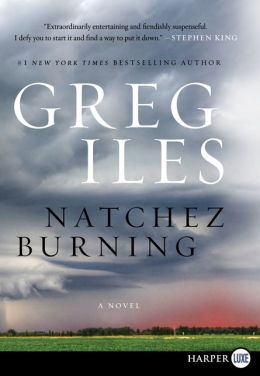
Greg Isles, Natchez Burning, Barry


Other recent Awards: The Hammett Prize, from The International Association of Crime Writers (North American Branch) went to Stephen King for his novel, Mr. Mercedes. Paul Cleave’s Five Minutes Alone picked up the 2015 Ngaio Marsh Award for best crime novel. Another note: The Shamus for best Indie P.I. novel (a rare, but timely category) was awarded to Trace Conger for The Shadow Broker, which I reviewed here earlier this year.  In the cozy world, this year’s Agatha was given to Hank Phillippi Ryan for Truth Be Told. 

*Note To qualify for the Shamus, the main character must be a private investigator or a non-cop who is paid for his or her services.


Thursday, July 11, 2013

Best Crime Fiction Awards — Who Needs Them?

Dick Francis, most Edgars

During the last 30 days or so, it has been award time in the crime fiction world.  Not the winners, but the nominees.  There are dozens and dozens of organizations wanting to give crime writers their due, not only for best novel of the year but also in many sub-categories — best first novel, best paperback original, best short story, etc. — all vital to the genre.  Many of the most coveted awards will be announced this fall as the Mystery Writers of America (MWA) holds its annual convention — Bouchercon.

Should we care?  These are difficult times for everyone who reads, writes, reviews and publishes crime books. Even the professional organizations are struggling to find ways to acknowledge and honor contributors while the dramatic changes in e-book and self (independent) publishing have complicated the way they have been doing so since they began doing business. Anybody can publish a book.  And sometimes, it seems, everyone is.  To be fair and inclusive is nearly impossible. Some, MWA for example, have adjusted submission criteria.  Others have added categories. In any event, awards no matter what shape they may take, will likely remain part of many readers’ vetting process.

Laura Lippman, picking up the prizes
Paying attention to formal accolades is not the only way to find good books, particularly if you are interested in establishment-challenging sub-genre books and break-out-of-the-box, emerging writers. However, most of the library-going and book-buying public are traditional readers.  They are looking for something new or different to read with some assurance they are not too far out of their comfort zone. Browsing a list of award winners isn’t a bad place to start.

I’ve picked five professional crime-writing related organizations that have been honoring writers with awards since (at least) the year 2,000.  Some have been doing so longer. To contemplate who, among contemporary crime writers, might be considered best of the best, I checked the following award histories to see who won the “best novel” award more than once.  Here are the results:

MWA (The Edgar)*
Historically, Dick Francis picked up the most Edgars with three.  James Lee Burke won two prior to 2000. In this century, John Hart and T. Jefferson Parker have picked up two, Hart for successive novels.

John Hart, up and coming
Mystery Readers International (Macavity)
Michael Connelly, Nancy Pickard and Peter Lovesey have each won two since the first award was given in1987.

Deadly Pleasures magazine (Barry)
Michael Connelly and Laura Lippman have each garnered two.

Private Eye Writers of America (PWA) (Shamus)*
From the birth of the Shamus in 1982, Sue Grafton has been honored with the award three times, Max Allan Collins and Bill Pronzini twice.  Also, since 2000 Ken Bruen and Reed Farrel Coleman have picked up two.

MWA (The Anthony)*
Michael Connelly has received four Anthonys.  Louise Penny, Sue Grafton and Laura Lippman have been awarded the prize three times. S, J. Rozan and William Kent Krueger have each won twice.

Other Notes 
In 2008, Laura Lippman won three of the five top awards for What The Dead Know.  In 2011, John Hart also received three of the five major prizes with The Last Child. The Edgar for Best Novel of 2013 was announced at ceremonies in New York earlier this year.  Dennis Lehane picked it up for Live By Night.

Click here for the complete list of 21st century “best novel" winners from the above organizations.


*To clarify, MWA has two awards, the Edgar determined by the organization and the Anthony determined by a vote of the membership.  To qualify for PWA’s Shamus, the novel must feature a P.I who is paid for his or her work.