Showing posts with label Michael Connelly. Show all posts

Wednesday, July 6, 2016

If You Haven’t Already, Binge On Bosch

I’ve read most of Michael Connelly’s books. I haven’t reviewed them here because he gets a giant’s share of crime writing attention as it is.  Deservedly so.  I did praise the film, Lincoln Lawyer on this blog. I loved the book, but I was shocked at how much I liked the movie. I wasn’t a Matthew McConaughey fan, but his incredibly believable portrayal of the too easily compromised attorney was more than convincing. There was a sense of gritty reality to both the book and film that came across.  Magic.  I bought it all.  When the folderol exploded for Amazon’s Bosch series based on Connelly’s books, I was curious, but not impatient to see it. In promotional footage I saw brief flashes of Titus Welliver who would be Bosch and I thought “naaaah.”
Titus Welliver And Jamie Hector

I had been wrong about McConaughey.  And now I have to admit I was wrong about Welliver. So wrong. He is good, walking a thin line between being foolishly human and holding fast to his principles. I binged on the bookseller-gone wild’s bold entrance into programming. The day before the Bosch binge, I watched a big-budget crime-action film with a major star as the driving force.  I found myself predicting every scene, what was going to happen before it happened, and the whole point of the film – revenge – when the super hero killed off a whole contingent of bad guys single-handedly.  All we needed to know about the characters is the bad guys were bad guys, the good guy was not only always right, but he could dodge bullets and deal deathly blows to a well-timed onslaught of attackers.  He must have killed 20 bad guys. With Bosch, I had a sense we were dealing with believable people in dramatic but believable situations.

I guess loving superheroes is as valid as anything else.  We are talking fiction. I certainly don’t mind stylistic approaches to crime cinema.  Sin City is a favorite. Blade Runner is at the top of my favorites list. But if a movie wants to reflect the moment, I need to be convinced the moment really exists. I don’t want to know what’s happening next and I certainly don’t want cardboard characters being shot like targets at a gun range.


Bosch's Boss, Amy Aquino
The Bosch series avoids the pitfalls.  The cinematography is by Eric Allen Edward, who gets L.A. just right, and the actors, especially cops portrayed by Amy Aquino, Jamie Hector and Lance Reddick, bring this often underplayed realism to a suspenseful story-line.  The story or stories were developed by Eric Overmyer who, I think, smartly decided not to do the obvious, simply put each of Connelly’s books on screen, but instead decided to use an amalgamation of some of Connelly’s books for each season.  Also smart was having Connelly himself close by for the writing and production. I’m told that writers are often on the lowest rung of hell in Hollywood. This should help right this wrong way ship.

For those unfamiliar with Connelly’s most popular protagonist, the first season sets up police homicide detective Hieronymus (Harry) Bosch as he searches for a serial killer. The story echoes or perhaps pays homage to the darker turn by author James Ellroy, The Black Dahlia. Whatever the intent, it works well, giving us the background necessary to understand Harry’s underlying bitterness.


Season two is a little slower than one, providing a bit more backstory and depth of character. It is also not as gritty and tough as “The Wire.” Understandable. This isn’t front-line Baltimore. These are L.A. stories being told. They are as much about the soft life in the bedroom as the tough life on the streets.  I’ve only visited Los Angeles — or as some might call it, ‘a whole bunch of suburbs in search of a city. A few days here and there on business and visiting friends.  After 20 episodes of Bosch, I feel like I’ve lived there. And now I do, sort of.  I’m a couple of hours east in Palm Springs.


Amazon says it is definite: There will be a season three. When is it going to be available? No one seems to know, but those more in the know than I suggest a premier in early 2017.


If you binge and need some refreshments as the hours go by, remember Bosch orders beer.  Flat Tire.  But we’ll spend most of our time in Southern California. It’s hot. Lemonade will do.


Tuesday, October 1, 2013

Actors Of Distinct Character — His Name Is Mud


I was not a fan of Matthew McConaughey. Weighing whether or not I was going to see a film he was in his presence would tip me against it. I’ve since changed my mind. As I think back on it, it might have been the character (sleazy, unctuous) he played regularly, combined with the fact that he played those characters so well that it made me squirm.  I began to change my ways when they made a movie out of my favorite of Michael Connelly’s books, The Lincoln Lawyer. I wasn’t thrilled they picked McConaughey to play the title role.  On the other hand, I knew instantly it was the right choice.  Here was a charming but slimy, opportunist with sliding scale principles.  In that sense Connelly captured and McConaughey delivered a spot-on stand-in of the country’s legal system. There’s a major leap from the law to justice. The character and the actor walked the razor’s edge between despicable and redeemable.
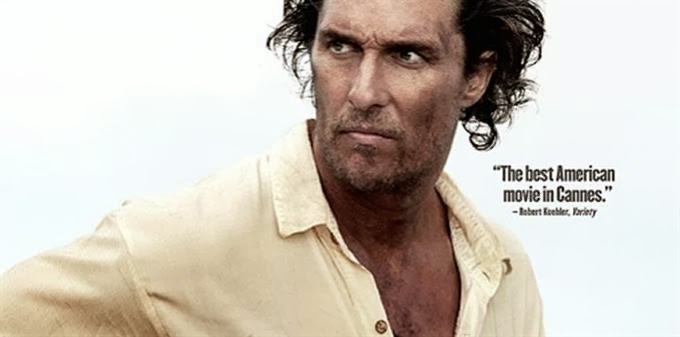
McConaughey in Mud


In the film, Mud, McConaughey has confirmed, now, through a significant body of work, that he has carved out a permanent place among the great male character actors, each creating a singular mark in the profession, character actors so strong they can carry a film, much as McConaughey did with Mud. We saw the seeds of this character in A Time To Kill (an adaption of John Grisham’s best, now on Broadway) and the result of that loss of Innocence in The Lincoln Lawyer.  Now we see it gain and again, most recently in Killer Joe and The Paperboy, and before that in Magic Mike.  It’s obvious we’re not witnessing an actor pursuing the same goals as Daniel Day-Lewis or Robert De Niro, becoming someone entirely different for each role, but creating an original “type’ in much the same way as Christopher Walken, Vincent Price, Charles Laughton, Clifton Webb successfully created original types.

Mud, incidentally, is a worthwhile film. Whatever you may think of Reese Witherspoon – and I like her – she does a great job here as does Sam Shepard.  Talented Tye Sheridan and Jacob Lofland play the two teens, one of them investing his entire view of the world on a drifter’s honor.


Monday, May 13, 2013

On Writing — When Secondary Characters Want More


I don’t pay attention to trends in crime writing.  I figure that by the time I’d finish writing a book in concert with what was popular when I began, the hordes of readers who appreciated the trend will have moved on to the next one.  The truth is I’m still writing private eye novels, which proves how disconnected I am to pop culture.  But I’ve read recently that one current trend is to have mysteries with characters who may play a minor role in one book take the central role in the next.  This creates a blend of the series approach to writing with that of standalones, or one-offs as some call them.  The benefit for the reader and writer is continuing to visit old friends, while also infusing a large measure of freshness. Not a bad idea.  And while it is not a new approach, it is heartening that we’re looking at structure and technique rather than something more ephemeral, such as introducing angels or vampires.

Louise Penny. It takes a village.
I’ve not done that exactly.  But I’ve had secondary characters steal the limelight from the intended principals.  For example, I’ve had a number of readers suggest that if something should ever happen to aging private eye Deets Shanahan, protagonist of 10 of my novels, his girlfriend, Maureen, could take over all the private investigating and all novels after the old man’s demise.  In fact, some readers went further.  They suggested I take Shanahan out next time around, leaving Maureen to find out who did it.  I’m glad they like her, but her rapid ascension wasn’t anticipated. And I have a soft spot for the septuagenarian, especially as I approach the category.

This kind of pleasant surprise turned out to be true of the second series, too.  Two private investigators —highly professional Carly Paladino and street-wise Noah Lang —anchor the San Francisco mysteries. However it is clear to me that Thanh, a smart, unconventional gender-bending assistant to the firm and SFPD Homicide Inspector Vincente Gratelli, the veteran, world-weary widower are just as, if not more, popular with readers.  

Oddly enough, Thanh’s story was told in Mascara, Death in the Tenderloin.  That short novel not only preceded the Paladino and Lang books, it was the backstory for all the books in the series.  And Gratelli was a major player in my unrelated mystery Good To The Last Kiss before becoming a regular in each of the Paladino-Lang stories.   In all cases these “supporting” players made the books better. Their prior and independent appearances, I believe, provide additional depth not only to their character but to the subsequent books in which they appear. 

What am I trying to say?  That I understand the appeal of an interlocking cast. Those trend-setting or trend-following writers may be onto something when they revisit and expand the roles of minor characters, especially those who show promise.  It is a form of repertory, not of actors, in this case, but of characters. 

Secondary Character — William H. Macy is Lincoln Lawyer's P.I.
This isn’t new, of course. For example, Michael Connelly has cross-pollinated his protagonists.  Tormented cop Harry Bosch has worked cases with Lincoln Lawyer Mickey Haller and former FBI agent Terry McCaleb — all leading men.  However, in this case, a better example of tis particular trend might be Louise Penny who has focused on the potential contribution of a realistic, yet conveniently captive, supporting cast.  She has exploited the benefits of murder in a tiny village, where all the minor characters know each other — and there are plenty of them — and MUST reappear from book to book, climbing into or shrinking from the limelight, depending on the story. Though Penny appears to be more in tune with the current trend, Connelly has nothing to worry about.  Between the two of them, they are the bestseller list.  For good reason.  Even so I’m still pissed that Connelly whacked the Lincoln Lawyer’s P.I., a great secondary chararacter.

In the end, though, a trend is a trend.  I don’t believe one writes to a trend successfully, nor starts one intentionally.  It’s serendipity. And once established, good writers are trend resistant. For the new and struggling it’s not quite the same. One must deal with publishers and agents who are dazzled, if not outright hypnotized by the most recent fashion turn in mysteries.

In my case, would it help if I explained that I’m one-eighth Norwegian?


Friday, March 16, 2012

Film Pairing — Famous, Contemporary Fictional Lawyers, From Books To Screen

I never saw what the deal was with Matthew McConaughey. Perhaps it was because he played unintentionally unsympathetic characters in the kind of movies I wasn’t inclined to see anyway. However, twice that I know of, McConaughey gave performances so clearly on the mark, I can’t imagine another actor pulling them off as well. Both times — in roles years apart — he played an attorney. Both films were based on characters and stories created by deservedly best-selling novelists, who — surprise — liked the movies made from their books. And both times the actor, most famous for taking his shirt off in films, didn’t need to carry the films on his bare shoulders, but could rely on a highly talented supporting cast.

The first is A Time to Kill, based on John Grisham’s novel by the same name. We go back to 1996. A black man kills the two white men who raped and killed his daughter. The movie controversially sets up the conflict of letter of the law against righteous revenge. Are we a nation of laws? We’d like to think so. But what if the law won’t exact justice? Is vigilantism ever justified? The film was panned by some critics because the film appeared to take a side in the argument.

On the other hand there is no argument about the cast. It is stellar. Samuel L. Jackson played the pivotal role of father. He was nominated for a Golden Globe Award for “Best Supporting Actor.” One could make a case that it should have been for “Best Actor.” Among the others who contributed to this solid drama were: Kevin Spacey, Donald Sutherland, Kiefer Sutherland, Sandra Bullock, Ashley Judd and Chris Cooper. The background, as you might have guessed, is the Deep South. The KKK is featured. The problem is that while the white sheets rarely make appearance these days, the attitudes haven’t disappeared. The film remains timely.

The second feature is The Lincoln Lawyer (2011). An older, somewhat weathered as well as appropriately wizened McConaughey plays Mickey Haller who plays all sides to get what he needs. One has the sense that the only people he won’t game are his daughter and his private investigator, played by William Macy. On the other hand, Haller lives and works in a world where trust is dangerous and playing it straight is unprofitable. Again McConaughey is backed up with a talented cast. In addition to the always incredible Macey, we see Marisa Tomei, John Leguizamo. Bryan Cranston does a great job of playing a tough, veteran, cynical cop. And Ryan Phillippe creates perfect pretty boy sociopath.

Haller is the lawyer whose office is in the back of Lincoln Town Car. He is the creation of best-selling crime writer Michael Connelly (see last week’s post) and this is the first of what promises to be a major series of books and if the news last updated in August holds true, will follow Grisham’s The Firm onto the small screen in a series proposed for ABC-TV.

Finding an appropriate drink to accompany the movies is made difficult by the small-town Mississippi setting for A Time To Kill and the L.A. fast lane for The Lincoln Lawyer. I’m thinking that we look at something good in hot weather. Never mind that many are still enduring March, that cruel month. How about a gin and tonic? If you’re feeling particularly Southern, put in a mint leaf.

Monday, March 12, 2012

Book Notes — The Deeply Flawed Protagonist In The Deeply Flawed World

An author/blogger, awhile back, wondered why so many book bloggers and reviewers talked so much about dead authors and popular authors when there were many fine, very-much alive current writers who could use a little attention. Being at least an alive current writer I second that emotion and have tried on this blog’s Book Notes and Old Gold to provide a little balance in that regard. However, this post will violate that spirit. I’ll be referring to such literary ghosts as the long-dead Sophocles — hard to get deader and more famous than that — the not-so-long dead Jean Anouilh and the also very much alive, but incredibly best-selling Michael Connelly. How’s that for name-dropping?
In 1943, Jean Anouilh’s adaptation of Sophocles’ Antigone was performed in Nazi-occupied France. For those who might have forgotten, Antigone is the story of King Creon’s attempt to celebrate the life of one of Antigone’s dead brothers and bring shame on the other by creating a politically helpful fiction about their deaths. One arbitrarily chosen brother was to be made a hero and the other a villain. Theoretically, Creon’s motive was to prevent a brutal civil war — and protect himself. His argument was that he would create this myth for the “greater good.”
Antigone would have none of it, favoring a full vetting of the truth no matter where it led. The Nazis were sensitive to propaganda, but apparently not as quick to pick up nuance. The German censors were fine with the production because they believed the story favored support for authority. The French, however, saw it differently, interpreting it as a play honoring the pursuit of the truth, justice and the French way, at any cost.
How does Michael Connelly figure into all of this? We’re coming to it. Let me throw another Greek into the mix first. The dialectical method is attributed to Socrates and involves argument as a means to get to the truth. At best, and honestly pursued, the Socratic method seems to be an effective (and potentially entertaining) way to arrive at the truth or as close to it as we can get. Not only is our justice system based on this principle, but it also appears to be the means, conceptually at least, by which we elect our government. The idea of having a public debate in the race is to have the views of the candidates’ proposed policies compete in the public marketplace for support.
The domination of this form of decision-making has evolved, through the inclusion and continued expansion of the media (the chorus) in America’s 21st Century. As the methods of communication have evolved to the point of absurdity through the unchecked use of contributions and the unlimited reach of technology, the end state of the art appears to have dissipated into not a clash of best ideas, but a clash of the best dodgers and persuaders. Reporting of the clash does not help us parse the logic, but focuses on the headlines rather than the story. It has nothing to do with honor and truth. The focus is on whoever is wielding the power most effectively. And in the modern age, whether one is an attorney attempting to win a case or a candidate trying to win an election, money is a greater factor than ever before. Talented attorneys and their staffs are for those who can afford them. In court, experts on contentious issues are bought and sold in a kind of auction for the truth. You bought this expert. Opposing council bought another. The same happens on the campaign trail when the surge of an emerging candidate can be stopped with a blitz of negative advertising.
With the U.S. Supreme Court having provided personhood to corporations and equating money with freedom of speech, proponents of one side or the other have the means to overwhelm the opposition with not just facts, but partial truths, innuendos and often outright lies — whatever they can get by with. Given the lack of regulation and oversight, a condition ballyhooed by some, business may now do that with their customers. Financial institutions, after they’ve purchased all the available legislators and when forced to be “transparent,” can do so, for example, by publishing hundreds of pages of small print to discourage anyone from reading it. Lawyers have been using this technique against the opposition for years. You want disclosure, by God I’ll give you disclosure. In fact, banking as a political force, has shown that it largely beyond the reach of the law. Government bailouts were not used to save banks, it seems, as much as it was to enrich the perpetrators of the fraud, for example. And you see these are the folks who finance the campaigns of those who create and enforce the laws.

And (Whew! Finally) it is in this American world that Michael Connelly’s Lincoln Lawyer series operates. Clever Machiavellian approaches to government and business may be as old as, well, Machiavelli. But now such amoral cleverness is not really exceptional. It is the everyday way we pass laws and sell widgets. And Connelly’s lawyer is the modern semi-hero, after all. Mickey Haller, the ethically challenged protagonist of Connelly’s lawyer series is not Harry (Hieronymus) Bosch, Connelly’s fame-establishing central character. Though the half-brothers’ voices are similar, their actions are not. The brooding Bosch is uncompromising. The pragmatic Haller understands the twists and turns he must make to succeed. Bosch is so upright he is almost prudish. And Haller is so sly he’s almost sleazy. Though I am a fan of both, for me Haller is more complex and more interesting character. Bosch is the 20th Century hero. Haller is the 21st Century American protagonist. As crime stories go, Haller is neither the lone cowboy whose honor may not be bought. He is also not the noir central figure who pays dearly when the drama ends for his past bad acts. He is engaging in the prevailing greed-polluted dialectic we call “business” and “governance” and surviving. America is more Creon’s domain than Antigone’s. We may not want to believe that. We may want to believe that good will conquer evil if only we were pure enough. Mickey Haller takes the world as it is not as we want it to be.
In The Fifth Witness Connelly turns his keen reporting skills and his experience with the court system and police departments into a something “ripped from the headlines,” but it is in some ways less than that. How compelling can foreclosures be? I wondered about that when the subject of the book was first mentioned. The truth is we don’t exactly get an expose of the thrilling world of accounting tricks. How much of that kind of detail could we stand? In fact, we don’t get an indictment or expose of the world’s finance industry and the compromised morality in which businesses and its leaders operate, which is what I expected. But I had no right to that expectation. It is a murder story.
Connelly, on the other hand has created something important, I think. While I may have looked for THE book of its times — say the early 2010’s version of Bonfire of the Vanities — he has created a thoroughly fascinating and relevant protagonist, a tightrope artist, a survivor in morally ambiguous times, one that is definitely of his times.