Wednesday, May 7, 2014

Book Notes — Short Story-Notes, When In Doubt, Try Crazy


I’m rummaging these days. What I turned up in my excursion through old photos, magazines, letters and books is a little gem — a short article by the very talented writer Gay Talese that had been inserted into the April 1966 issue of Esquire. It was called “The Greatest Story Ever Told: Frank Sinatra Has A Cold.”

It’s a long short story of maybe 10,000 words based on Mr. Talese’s observations during a few days leading up to the legendary singer’s 50th birthday. It is a revealing profile written in a style that combined journalism and fiction, a form touted as a new way of writing, the origin of which is in dispute. Truman Capote (In Cold Blood),  Norman Mailer (Armies of the Night) and Talese himself lay claim to its invention.

I’m a fan of Frank Sinatra, his music (“My Way” and “Strangers in the Night”) and his movies. He was extraordinary in From Here To Eternity, The Man With A Golden Arm and The Manchurian Candidate.  Though less revered as films, he was also believable and charismatic in such low-budget productions as The Detective and Lady in Cement. He hit the top as both a singer and actor. His tough–guy antics and supposedly torrid romances also fed the gossip mongers while the rumors of his mob connections not only added to his larger-than-life persona but, true or not, gave him a great deal of personal power The sad fact was, that despite his talent the man was a bully.

Talese painted a rich, three-dimensional profile of a man by, for the most part, by recounting a few hours in a bar and a few more in a recording session. The people around him were either in love with him or frightened of him or more likely, both. In almost all cases, whether he knew them or not, he made them nervous. Talese captured the essence man who may have wanted to be feared more than loved in what might be casual observations, condensing a life time into a few pages.

Most of us — of a certain age — cannot enter the story without prejudice. Sinatra’s reputation for being unpredictable — throwing a drink at someone or the whole bottle for example or simply punching them without warning or provocation — preceded him wherever he went. There was a sense that if he didn’t belong to the mob, he had one of his own. And it took next to nothing to piss him off. Though not part of this account, the singer once gave a waiter $50 to punch writer Dominick Dunne who was sitting a few tables away. The waiter did what he was told. The money probably had nothing to do with why the young man’s fist found Dunne’s face. In another account, a drunk and angry Sinatra tried to set the Las Vegas Sands Casino on fire.
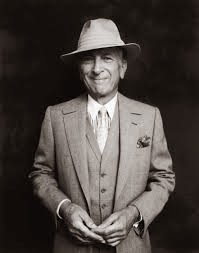
Gay Talese
But as the Talese story goes, Sinatra decided to leave the main bar and go to the back room where a few folks were playing pool.  When the door opened, peope stopped what they were doing. The chairman had arrived.  Should they stand at attention?  Maybe salute?  However, one guy didn’t seem interested in Sinatra’s arrival, It was writer Harlan Ellison (author of A Boy And His Dog among many classic books and screenplays). Ellison’s profound indifference was provocative.

Sinatra confronted Ellison.  Perhaps because he couldn’t think of a legitimate reason to be upset or a better insult to proffer on such short notice, Sinatra said he didn’t like Ellison’s boots.  Ellison suggested that the singer’s likes and dislikes weren’t important to him.  After a few moments of nervous silence, the room began to clear. Even tough ball-player Leo Durocher discreetly put down his cue stick and disappeared.

Harlan Ellison
“Why do you persist in tormenting me? Sinatra asked Ellison softly — “almost a plea,” Talese remembered. Whatever it was, or could have been, was over.

When I first moved to San Francisco, I found a room just off Haight Street on Stanyan. It was post “Summer of Love.”  In fact it was well past the “wear a flower in your hair” era.  The marijuana was laced with Angel Dust PCP), hard stuff, mean stuff.  The neighborhood appeared to have been ransacked, gray. Store fronts were closed and the whole neighborhood was dismal, a war zone. The folks who roamed there were either vacant-eyed lost souls or toughs looking for someone to roll.  A friend, who calculated that my blond hair, soft face and Midwest attitude would reveal the mark of the mark, gave me some advice.  He said that if I ever found myself in a dangerous situation, I should just act crazy.  “Everybody’s afraid of crazy,” he said.


Monday, May 5, 2014

Observation — 1940, A Whole lot Of Invading Going On


Winston Churchill became British Prime Minister.  Leon Trotsky was assassinated in Mexico.  The USSR invaded Estonia, Latvia and Lithuania. Hitler invaded Norway and Demark. U.S. initiated the Draft. McDonalds opened its first hamburger stand. The first social security check was mailed out.  The 40-hour week was established. Plasma began to replace whole blood in transfusions. Superman debuted on radio. Bugs Bunny was born. So were Tom and Jerry. And Woody Woodpecker. Abbott and Costello released their first film.  Frank Sinatra made his singing debut in Indianapolis at the Lyric. The USSR invaded Finland. Germans invaded France. The Japanese attacked French Indo-China. Wilbur Shaw won the Indianapolis 500.  John Steinbeck’s Grapes of Wrath won the Pulitzer Prize for Literature and was made into a film. William Saroyan won the Pulitzer for Drama for The Time of Your Life. The Academy Award went to Gone With The Wind. Other movies that pulled in the crowds included His Girl Friday, Pinocchio, Rebecca, The Bank Dick, The Philadelphia Story and Fantasia.  The Billboard Chart was established. According to them, we listened to “I’ll Never Smile Again” by Tommy Dorsey, “Only Yours” by Bing Crosby and “Frenesi” by Artie Shaw. Among the ‘40s books we read were For Whom The Bell Tolls by Ernest Hemingway, Native Son by Richard Wright, How Green Was My Valley by Richard Llewellyn, Kitty Foyle by Christopher Morley, and Night in Bombay by Louis Bromfield. Tom Mix and F. Scott Fitzgerald died in 1940. Among those born this year were John Lennon, Al Pacino, Smokey Robinson, Richard Pryor, Frank Zappa, Martin Sheen, Jack Nicklaus, Mario Andretti, Wilma Rudolph and Nancy Pelosi. If you were around, what were you doing during this year of the metal dragon?


Friday, May 2, 2014

Rant — Bullies Run Amok And Other Gangs


Mitch McConnell
It all started with an email from the people at Magna Cum Murder who along with producing a wonderful annual mystery writer’s conference also publish a periodical for attendees. They were doing  a story in an upcoming issue. They asked a number of mystery writers who or what they they considered their muse. I couldn’t come up with one. A day or two later, it came to me — My muse is the news.  What interests me are the issues that we have trouble with. My first book 25 years ago, for example, was triggered by the onslaught of and the sad demonization of HIV It also dealt with racism. Subsequent books have dealt with similar controversies: the hypocrisy of religion as it was manifested in the sexual abuse of minors by Roman Catholic clergy; cloning; corporate bullying; discrimination against gays; and corruption in the criminal justice system.

I didn’t jump on the top of these subjects because they had been popularized by the news — “ripped from the headlines,” so to speak — but because muse-like, the news stirred my passion for fair play. The driving force for Shanahan character in the Shanahan series is his distaste for bullies.

There are two current news items that I’m not likely to write about in a book — though I wish someone would. Where is Arthur Miller when you need him?  The two stories have common threads. One is the story of the L.A. Clippers owner who unintentionally revealed some deep-seated prejudices against African Americans.  The other is the filibuster of the Senate bill passed to raise the federal minimum wage.

I feel the need to make a few statements before I proceed.  I am a capitalist at heart.  I believe in competition. If someone has a great idea, works his or her butt off and risks personal savings to create a business and it works, that person, whose responsibility doesn’t end when the shift ends, is entitled to a larger piece of the pie. But I’m not a free-market, anything-goes capitalist.  Any decent competition has rules to make sure the playing field is level. CEOs and investors shouldn’t be banking millions while the employees earn less than a livable wage.

To take the second subject first, last week Senate Minority leader, Mitch McConnell, whose personal net worth is $22.5 million, and who earns $193,400 for his job as chief obstructionist, filibustered against the law the Senate passed to raise the minimum wage. While McConnell, a Republican from Kentucky, earns $92.98 per hour on his day job, (not to mention a Cadillac healthcare policy and cushy retirement package) he thinks it’s quite all right for others to earn $7.25 an hour. This same McConnell-led group of millionaires is also anti affordable healthcare. They call for a cut in food stamps. And they are against equal pay for equal work. Women are second-class citizens in that regard.

McConnell is a bully and he leads a gang of bullies, but he would never speak as directly as Donald Sterling. The Clippers owner offers a more interesting study. There’s not a sane soul anywhere who could stomach his racist remarks. But beyond that bit of ugliness, there is an underlying worldview that is troubling because of what it insinuates about American democracy.

This is what he reportedly said about his team: "I support them and give them food, and clothes, and cars, and houses," Sterling rails. "Who gives it to them? Does someone else give it to them?”  His players, through their talent and hard work do not earn their living? He gives them what they have — no doubt out of the kindness of his heart.

He continued. “Do I make the game, or do they make the game?”  I suspect he honestly believes this.  He’s done this all by himself! It’s a belief held by many, certainly not all, but many CEOs whether they run a professional basketball team or a chain of pizza parlors. 

The problem is that Sterling’s entitlement thinking is the same as McConnell’s and his gang of bullying millionaires. Employers don’t have to pay fair wages. This is also the mindset that allowed the U.S Supreme Court* to say that corporations are people and, even worse, that money is speech. At $7.25 an hour, you don’t buy much of that so-called ‘free” speech.

A muse?  These two stories — McConnell’s and Sterling’s — are the tragic stories of our time.  They tell us so much, yet we do not listen.   

* The U.S. Supreme Court also struck down key provisions of the 1965 Voting Rights Act because, as some judicial comments suggested, racism was a thing of the past, which suggests that at least some justices are stupid, mean, or dozing on the bench.


Thursday, May 1, 2014

Observation — 1966, Another Year For The Beatles, Yet Here come the Monkees


Famine in India. Indonesia’s Sukarno left power. Suharto took it. Georges Pompidou became French premier. FDA approved “the pill.” Medicare took effect. U.S. Supreme Court endorsed Miranda rights.  Court also reversed lower Court’s declaration that the novel Fanny Hill was obscene. Julian Bond was denied his seat in the Georgia legislature because he opposed the Vietnam War. Serial killer Richard Speck killed eight nurses in Chicago. Sniper Charles Whitman killed 18 on the University of Texas campus. Lyndon Johnson asked Congress to pass gun control legislation. Sandy Koufax won his third Cy Young Award.  Graham Hill won the Indy 500.   TV debuts included “Star Trek,” “The Monkees” and “Batman.” The Beatles criticized Imelda Marcos and were attacked on stage in the Philippines. It was a huge year for the Beatles and wannabes.  “Revolver,” “Rubber Soul“ and “Yellow Submarine” were released. The Dave Clark Five made their 12th appearance on the Ed Sullivan Show.  We were also listening to “Sounds of Silence” by Simon & Garfunkel, “Monday, Monday,” by the Mamas & Papas, “You Can’t Hurry Love” by The Supremes and “Purple Haze” by Jimi Hendrix. However the number one tune was “Ballad of The Green Beret” by Sergeant Barry Sadler.  Top book sales went to Valley of the Dolls by Jacqueline Susann followed by The Source by James Michener. For the literary crowd this year saw the publication of Giles Goat Boy by John Barth, Up Above The World by Paul Bowles, In Cold Blood by Truman Capote, and The Crying Lot of 49 by Thomas Pynchon.  The Mystery Writers of America gave is highest honor, the Edgar, to Adam Hall for The Quiller Memorandum.  The Pulitzer went to Katherine Anne Porter for her short stories.  The Academy Award for best picture went to The Sound of Music.  Other films of note: A Man For all Seasons, Who’s Afraid of Virginia Wolf and A Man And A Woman. Mike Tyson, Halle Berry, Janet Jackson and Kiefer Sutherland took their first breaths.  Walt Disney, Montgomery Clift, Clifton Webb, Buster Keaton, Lenny Bruce, Hedda Hopper and C.S. Forrester took their last. If you were around, what were you doing during this year of the fire horse?